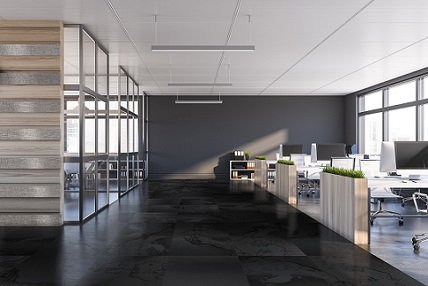

Nel secondo dopoguerra statunitense, per far fronte a problemi economici che avevano attanagliato il mondo, nel neyorkese si pensò di utilizzare spazi dimessi come le fabbriche, da arredare direttamente; grande protagonista in tutto ciò fu ovviamente il metallo, oltre che in senso lato il concetto di organizzazione spaziale riecheggiante gli ambienti industriali.
Due sono i metalli Planium più indicati per soddisfare i requisiti estetici di questo stile, ma declinati in forma diverse. L’Acciaio innanzitutto, sia Inox ma, soprattutto, nella versione Cemento Inossidabile; questo tipo di acciaio ha infatti una cromia che rappresenta al massimo grado lo Stile industrial, evocando per certi riflessi cromatici un vero e proprio contesto da officina, industriale, ed è quello più indicato da posare a pavimento per evocarlo…
Anche l’Acciaio Ossidato, che assume un particolare colore apparentemente caldo e bruno (in cui si intravedono “reminiscenze” fredde)
Infine il Rame, molto portante per la cucina per un senso retro che emana e anche per il suo colore antico, rusticano, che può “rompere” la monotonia “argentea” dello Stile Industrial, senza però denaturarlo. D’altronde il suo colore rimanda anche al concetto di ossidazione e non va dimenticato che lo stile Industrial ha in sé anche questo concetto di “passato” e “vissuto”, e talvolta di avvale anche dei tubi…
L’industrial, che in Europa è arrivato in realtà decenni dopo, verso gli ‘80s, è tornato di moda di recente non solo perché il vintage è diventata una vera e propria pratica di culto, ma anche per questioni economiche, per la facilità di riconvertire ex spazi industriali in abitazioni o locali pubblici, di ristorazione…
—
INDUSTRIAL STYLE, THE METAL PLANIUM TO FURNISH HOME
After the Second World War in the United States, to face economic problems that had gripped the world, in New York it was decided to use abandoned spaces such as factories, to be furnished directly; obviously, the great protagonist in all this was metal, as well as in a broad sense the concept of spatial organization echoing industrial environments.
There are two Planium metals best suited to meet the aesthetic requirements of this style, but declined in different forms. Steel first, both in Stainless Steel but, above all, in the Stainless Concrete version; in fact, this type of steel has a color that represents the industrial style to the maximum degree, evoking for certain chromatic reflections a real industrial context of a workshop and is the most suitable to be laid on the floor to evoke it …
Also Oxidized Steel, which takes on a particular apparently warm and brown color (in which cold “reminiscences” can be glimpsed)
Finally, Copper, very suitable for kitchens for a retro sense that emanates and also for its ancient color, rusticate, which can “break” the “silver” monotony of the Industrial Style, without denaturing it. On the other hand, its color also refers to the concept of oxidation and it should not be forgotten that the Industrial style also has this concept of “past” and “lived”, and sometimes also makes use of pipes …
The industrial style, which actually arrived in Europe decades later, towards the 80s, has recently returned to fashion not only because vintage has become a real cult practice, but also for economic reasons, for the ease of convert former industrial spaces into homes or public places, restaurants …