Photo © DR and KSP Photo Agency
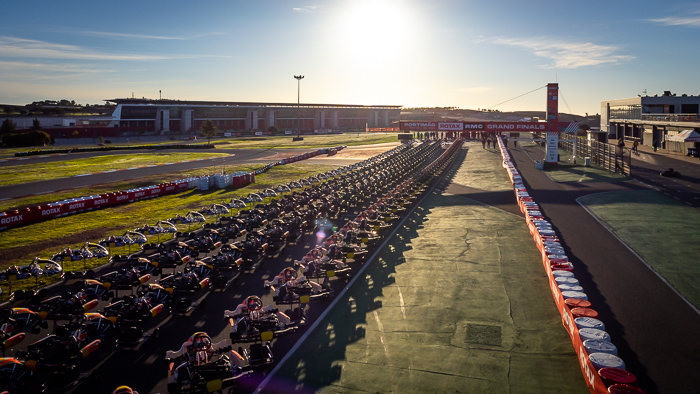
The Rotax Max Challenge Grand Final remains a major event of the season. The fairness of the equipment provided free of charge to the participants, the quality of the organisation and the care given to communication are some of the strong points of this much sought-after event. This 22nd edition also allows us to see the considerable evolution of the event since its origins. The number of categories and participants reflects the development of Rotax. This year, 394 drivers from 61 nations were invited in eight different categories, including two electric classes, a record to date.
The standard of competition was very high with the top drivers qualified in their countries and Rotax Evo engines as powerful as they were close to each other. The constant suspense during the races was fuelled by the considerable slipstream phenomena and the bravery of the competitors, motivated by their personal success, but also that of their country. Thanks to the five-day livestream, fans from all over the world were able to follow the competition closely and participate in its unique atmosphere during the on-stage broadcasts. Less fortunate than in the two previous editions, France lost to the impressive Team UK in the Nations Cup.
Hand-in-hand with the electrification trend
Rotax can be recognised as a pioneer of electric propulsion in karting. The E20 range has come of age and is now available in Senior and Junior categories, gradually integrating various championships in addition to the Rotax Max Challenge Grand Final. After the DEKM, the German national electric championship, the E20 was seen in the RMC Euro Trophy, but also in RMC Sweden. On the fast 1531 metres of the Portimao track, the E20 Senior was between 2 and 6 tenths faster than the Junior Max, while the E20 Junior was about 6 tenths behind. The performance is very good for this second generation of Rotax electric karts, using Sodi DD2 chassis, slightly adapted at the side posts to accommodate the batteries. Weight remains the main problem for these machines requiring the use of front brakes.
In Portimao, Rotax presented its new E10 project for the younger categories. This is a compact and light power unit that can be fitted in a few minutes on a classic Mini chassis. The performances recorded in Portimao during a demonstration place the E10 between the Micro Max and the Mini Max. Its ability to replace a petrol engine in a few moments lays the foundations for a product intended for a wider audience. Its use relies on opening up the various regulations to electric power, but this new project will undoubtedly be very interesting to follow.